Well Water Pressure Problems: Common Causes and Fixes
Low or uneven well water pressure can come from electrical issues, clogged filters, failing pressure tanks, pump problems, or plumbing restrictions. Learn what homeowners in the greater Houston area can check safely—and when professional service is needed.
Aqua Star Team
Aqua Star Well and Septic, LLC
Well water pressure problems are frustrating, especially when a shower turns weak, faucets fluctuate, or the pump seems to run constantly. For homeowners in Hockley, Cypress, Tomball, Harris County, Waller County, and nearby communities, pressure issues can develop from equipment wear, mineral or sediment buildup, power interruptions, and changing groundwater conditions. Understanding the likely causes can help you identify simple maintenance needs and recognize when a licensed professional should inspect the system.
Start with the symptoms
Before troubleshooting, note exactly what the system is doing:
- Low pressure at every fixture: The issue may involve the well pump, pressure tank, filter, control switch, or main supply line.
- Low pressure at only one fixture: A clogged aerator, showerhead, faucet cartridge, or local shutoff valve is more likely.
- Pressure that rises and falls repeatedly: This can indicate a waterlogged or failing pressure tank, a faulty pressure switch, or inadequate pump performance.
- Pressure that drops during extended use: The well may be recovering slowly, the pump may be worn, or a filter could be restricting flow.
- A pump that runs continuously: Possible causes include a leak, low water level, damaged pump, blocked line, or pressure switch problem.
Check whether the problem affects hot and cold water, all buildings, and multiple fixtures. Also listen for unusual clicking, humming, or rapid cycling near the pressure tank or control equipment.
Common causes of low or fluctuating pressure
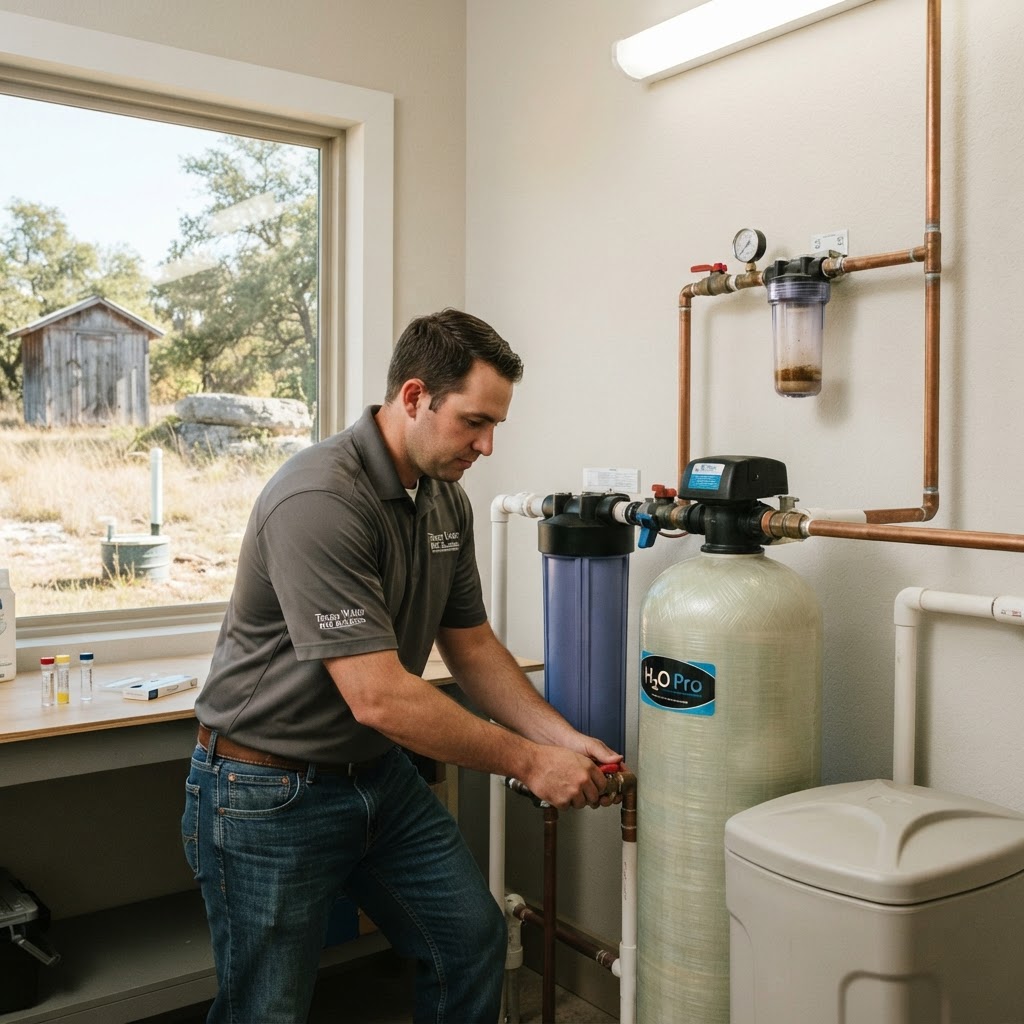
Clogged filters and treatment equipment
Sediment, iron, minerals, or other well-water conditions can restrict cartridge filters, softeners, and whole-house treatment equipment. A filter that has not been changed according to the manufacturer’s guidance may reduce pressure throughout the property.
If a filter is visibly dirty, replace it only with the correct type and size. Make sure bypass valves are in the normal operating position. If pressure improves when treatment equipment is bypassed, the equipment may need cleaning, adjustment, or service.
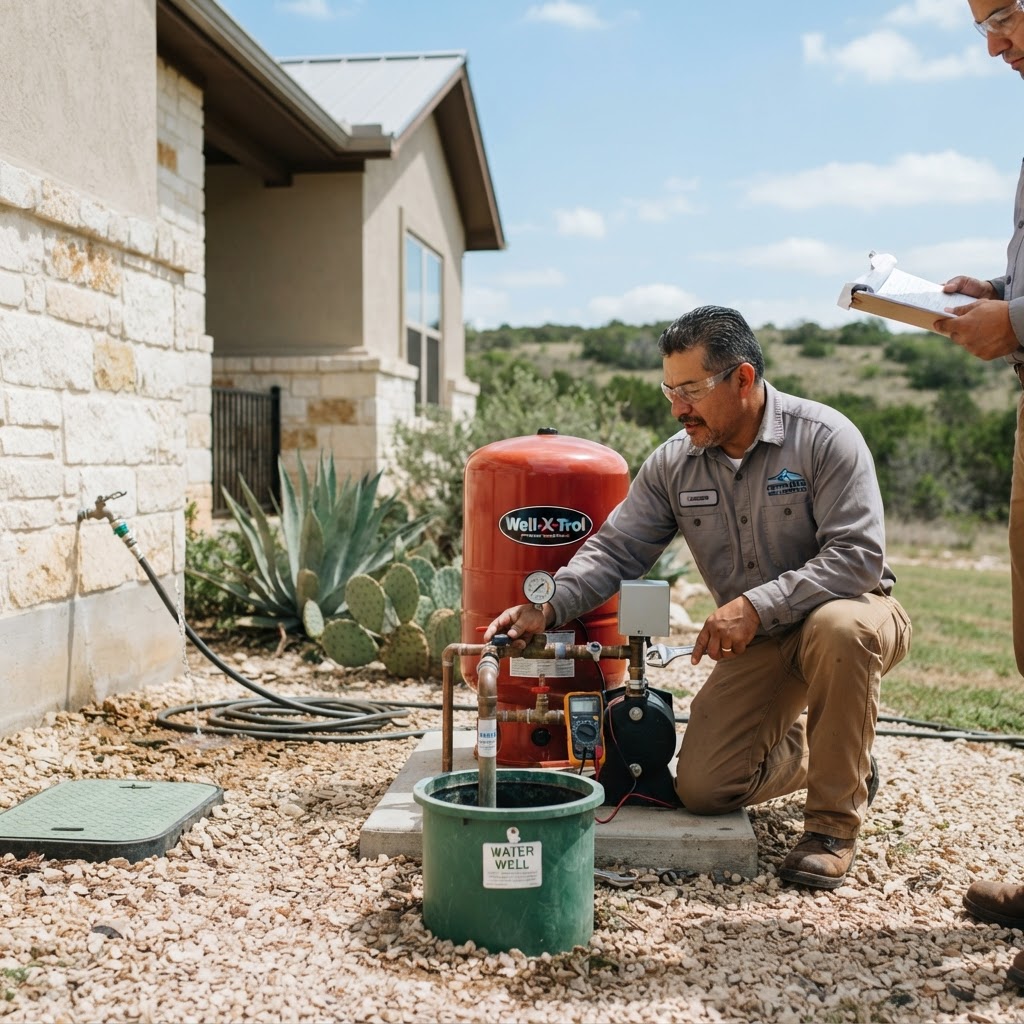
Pressure tank or pressure switch problems
The pressure tank helps reduce pump cycling and provides water between pump starts. A damaged bladder, incorrect air charge, or waterlogged tank can cause rapid cycling and unstable pressure. The pressure switch controls when the pump starts and stops; worn contacts, debris, or incorrect settings can also create pressure problems.
Because pressure-switch and tank work involves electrical power and pressurized plumbing, it is safer to have a qualified well technician test and adjust these components.
Pump, well, or water-level issues
A worn submersible pump, damaged drop pipe, faulty wiring, or a failing check valve can reduce water delivery. During extended dry periods, a well may also recover more slowly, although low pressure is not always proof that the well itself is failing.
Southeast Texas weather can contribute to changing conditions. Drought can increase demand on groundwater, while hurricanes and severe storms may cause power interruptions, flooding, or damage to electrical and well equipment. If a storm has affected the property, do not use water from a potentially flooded well until it has been evaluated and, when appropriate, tested and disinfected.
Plumbing leaks and restrictions
A leaking toilet, underground service line, pressure-relief discharge, or open hose connection can make the pump run frequently and reduce available pressure. Corrosion, scale, crushed piping, or a partially closed valve can also restrict flow.
Clay soils common in parts of the greater Houston area can shift as they dry and rehydrate. This movement may stress buried plumbing or create leaks over time. Watch for unusually wet areas, erosion, sinkholes, or sudden changes in pump behavior around the well and water lines.
Safe checks homeowners can perform
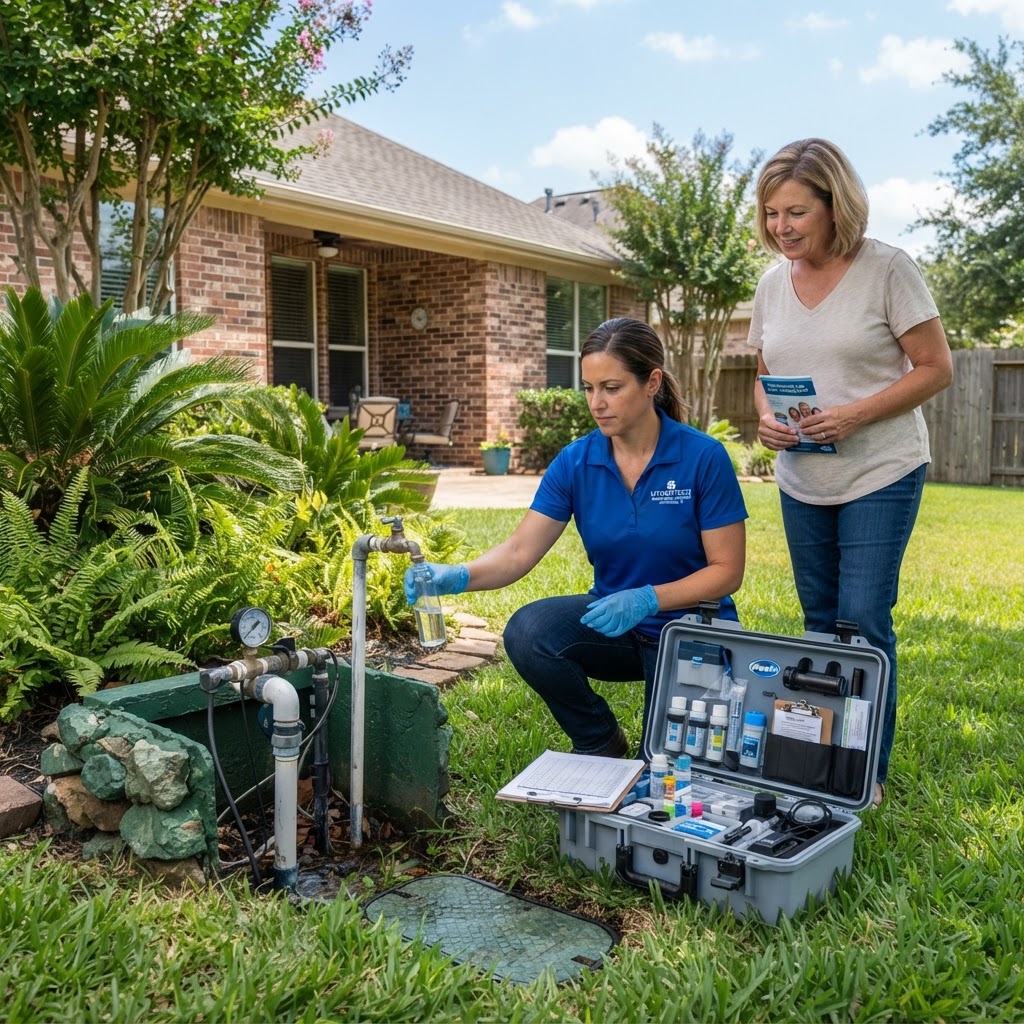
A few basic observations can help narrow down the problem:
- Confirm that the main water valve and any valves near the pressure tank are fully open.
- Check whether a whole-house filter appears clogged and whether treatment equipment is in bypass.
- Inspect accessible plumbing for dripping faucets, running toilets, or wet spots.
- Note the pressure gauge reading while water is unused and while a fixture is running.
- Verify that the well-system breaker has not tripped. If it trips again, leave it off and arrange service rather than repeatedly resetting it.
- Check outdoor faucets and irrigation connections for leaks.
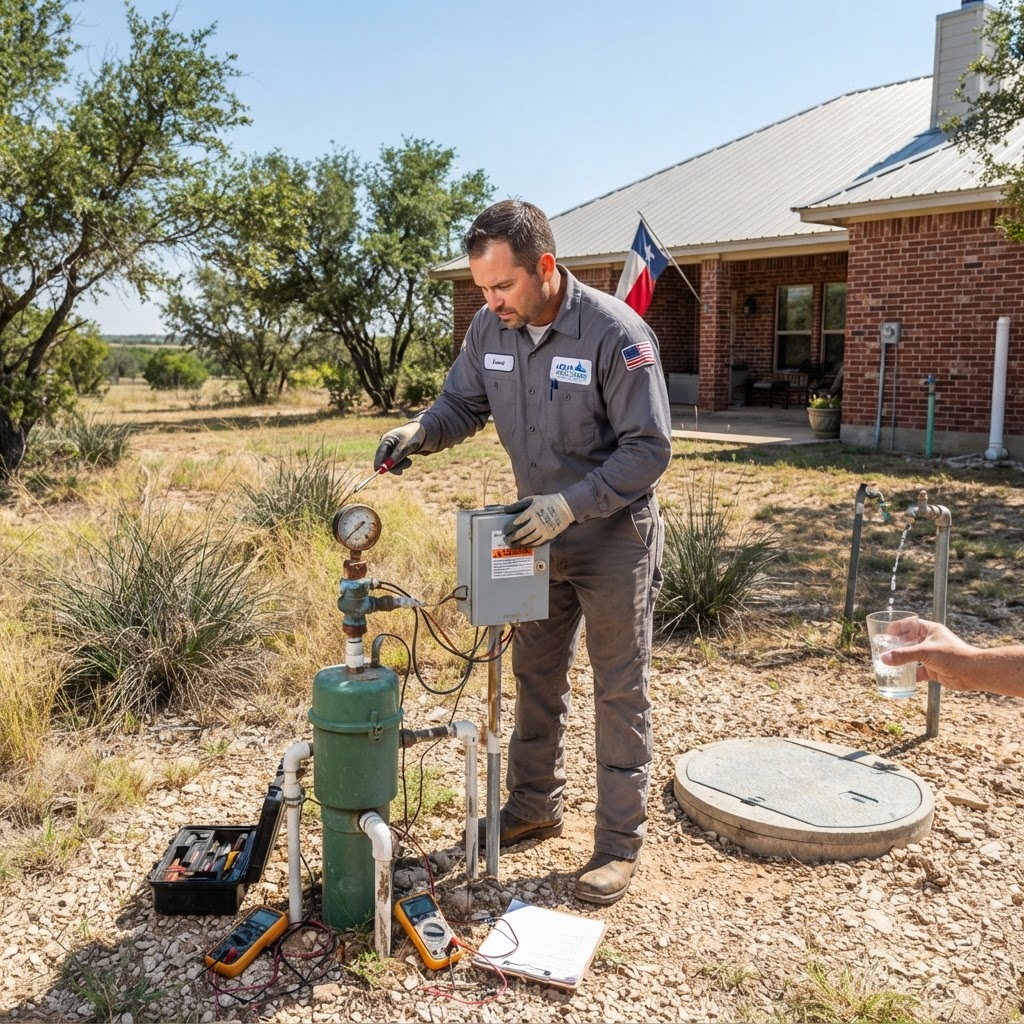
Do not open electrical control boxes, remove a pressure-switch cover, enter a well casing, or adjust pressure settings without the appropriate training. Well systems combine electricity, pressurized water, and potentially contaminated environments.
When professional inspection is needed
Contact a licensed well professional when pressure remains low after basic checks, the pump runs continuously, the system cycles rapidly, or the pressure changes suddenly. Service may include testing pump performance, checking the pressure tank and switch, inspecting wiring and controls, evaluating the well’s water level and recovery, checking for leaks, and examining filters or treatment equipment.
Water-quality concerns require separate attention. Changes in taste, odor, color, or clarity—particularly after flooding, repairs, or a long power outage—should be evaluated. Keep well caps secure and avoid allowing surface water to collect around the wellhead. In rural areas of Harris and Waller counties, proper drainage around the well can help reduce the chance of surface contamination.
Conclusion
Well water pressure problems can be caused by something as simple as a clogged filter or as complex as pump, tank, electrical, or well-performance trouble. Track the symptoms, look for obvious leaks and restrictions, and avoid unsafe adjustments to pressurized or electrical components.
Practical takeaway: If pressure is low throughout the property, fluctuates, or causes the pump to run continuously, schedule an inspection before the problem damages the pump or leaves your household without reliable water. Contact Aqua Star Well and Septic, LLC at 936-931-2443 for well-system inspection and service in Hockley and the greater Houston area.
Need Well or Septic Service?
Our licensed, insured team has served the greater Houston area since 1976. We're available seven days a week.
Call (936) 931-2443