Understanding Septic System Permits in Harris and Surrounding Counties
Learn who oversees septic permits in the greater Houston area, when a permit may be needed, and what to check before installing or changing an on-site sewage facility. Local requirements depend on the property and the work, so confirm details with the appropriate county authority before proceeding.
Aqua Star Team
Aqua Star Well and Septic, LLC
If your home in Harris County, Hockley, Cypress, Tomball, or nearby communities is not connected to public sewer, it may rely on an on-site sewage facility (OSSF)—the formal term for a septic system. Permitting can feel confusing because requirements depend on the property’s location, the proposed work, and the authority that serves that area. Knowing where to start can help you avoid delays and protect your home and nearby waterways.
Who oversees septic permits?
In Texas, OSSF rules are administered under state requirements, but local authorities handle permitting and enforcement in the areas they serve. Depending on the address, that may be a county department, a local health district, or another authorized agency. Harris County and surrounding counties do not necessarily follow one identical application process.
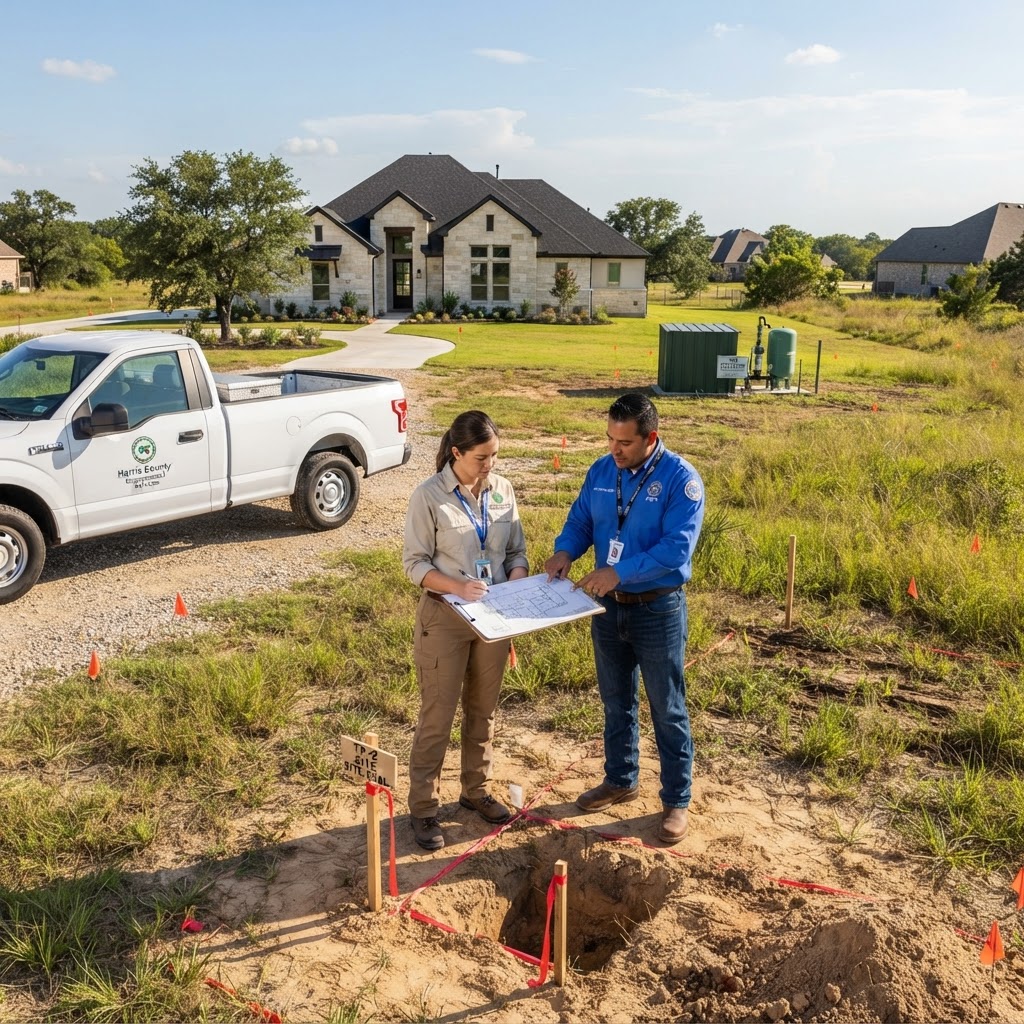
Before planning an installation, repair, or change, contact the authority responsible for the specific property. Ask whether the address is within its jurisdiction and what permits or approvals apply. This is especially important near county boundaries, where a Hockley, Cypress, or Tomball-area address may not make the responsible agency obvious.
When might you need a permit?
A permit or approval may be required for work such as:
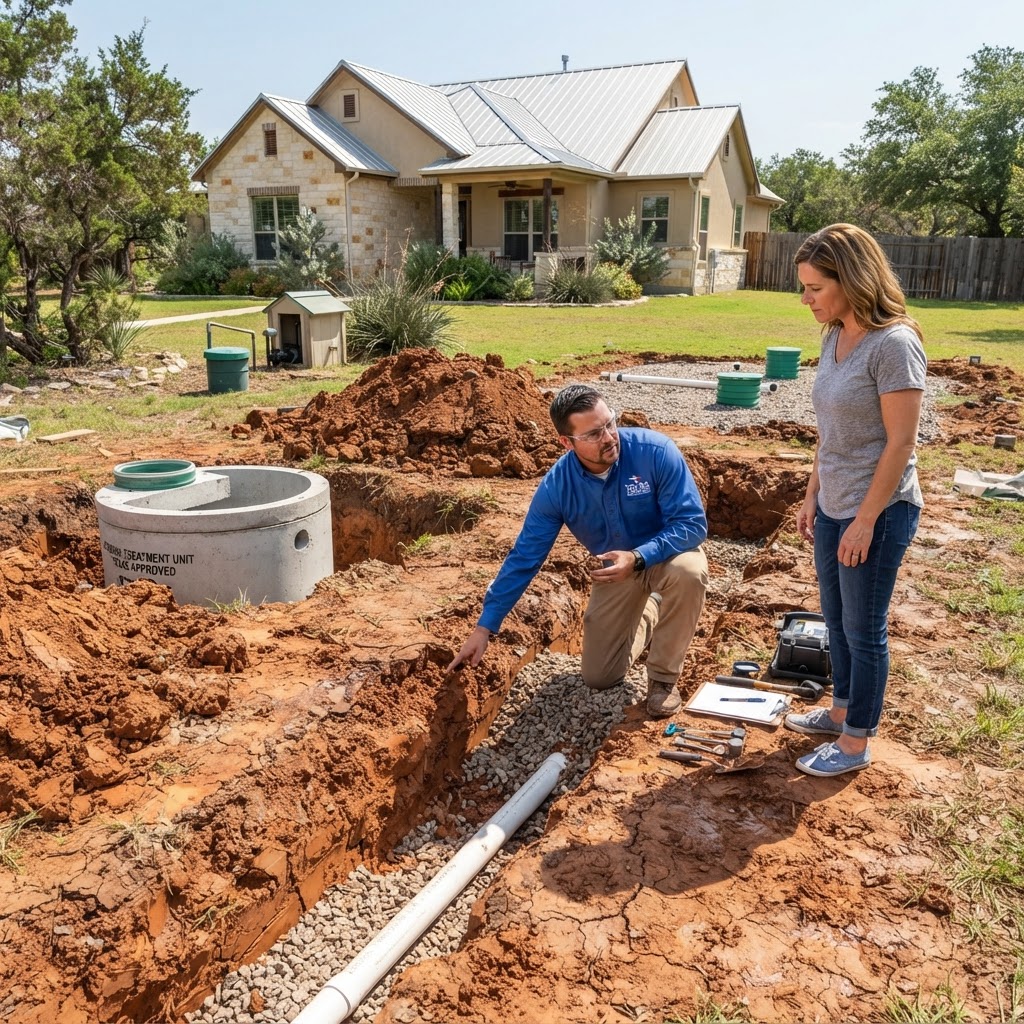
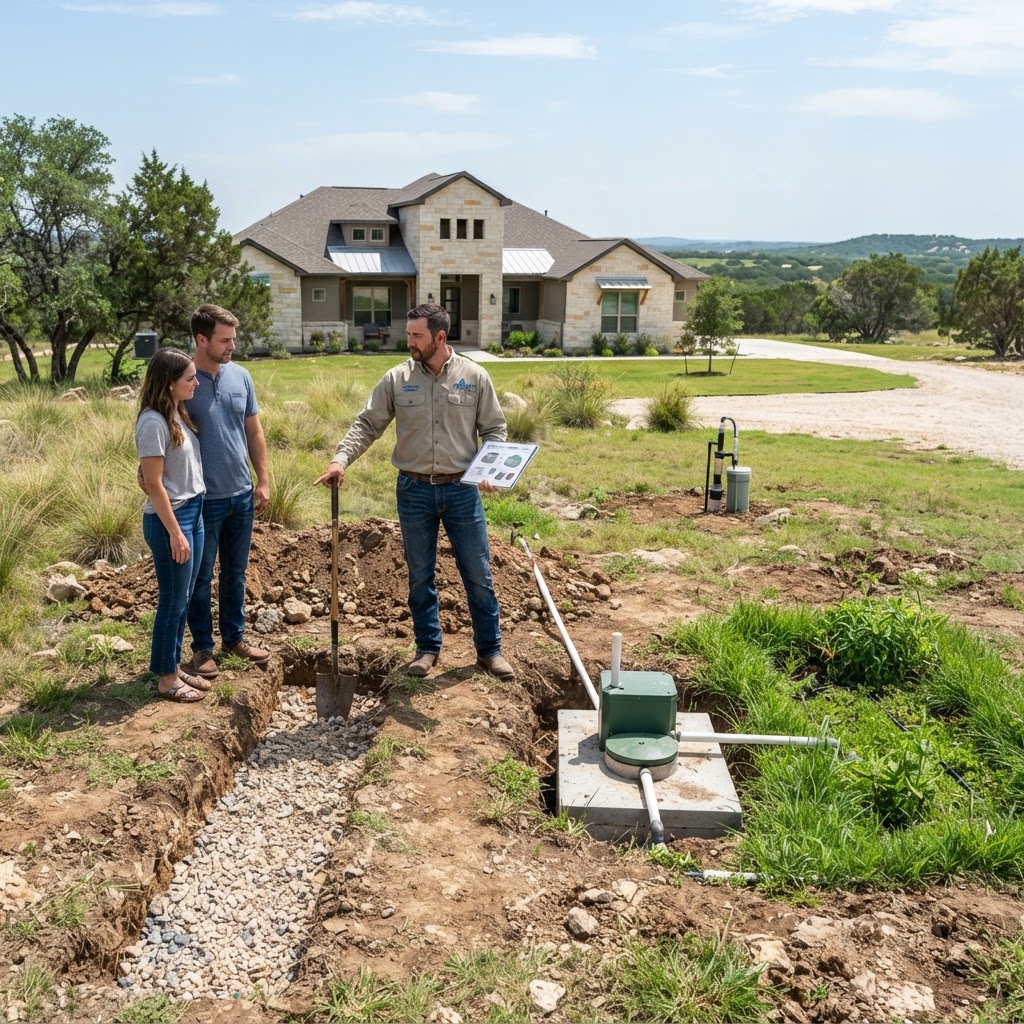
- Installing a new septic system, including for a new home or a property without an existing system.
- Replacing or substantially modifying system components or the overall design.
- Changing the property or its use in a way that affects wastewater needs.
- Addressing a failing system, depending on the scope of repairs and local requirements.
Routine maintenance, such as pumping, is different from system construction or alteration, but local rules and the circumstances still matter. Do not assume that a repair is exempt—or that an old system is approved simply because it has been in place for years. Ask the local authority what applies before starting work.
What information should you gather?
A permitting office may ask for details about the site, the proposed system, and the project. Requirements vary, but it helps to have:
- The property address and legal description, if available.
- Information about the home or building and its intended use.
- Any existing septic plans, permits, inspection records, or service history.
- A site plan showing the home, property lines, wells, water features, and proposed system location.
- Information about site conditions, such as drainage, soil, and available space.
Depending on the project and local rules, a site evaluation, system design, or other supporting documents may be needed. Confirm the current checklist with the permitting authority rather than relying on forms or advice intended for another county.
Local conditions matter in southeast Texas
Permitting is not only paperwork: the design and location must suit the property. Across the greater Houston area, clay soils and poor drainage can affect how wastewater moves through the ground. Heavy rain and hurricane-season flooding can also saturate the soil or expose system components. Dry periods and drought can bring different stresses, including changes in soil moisture.
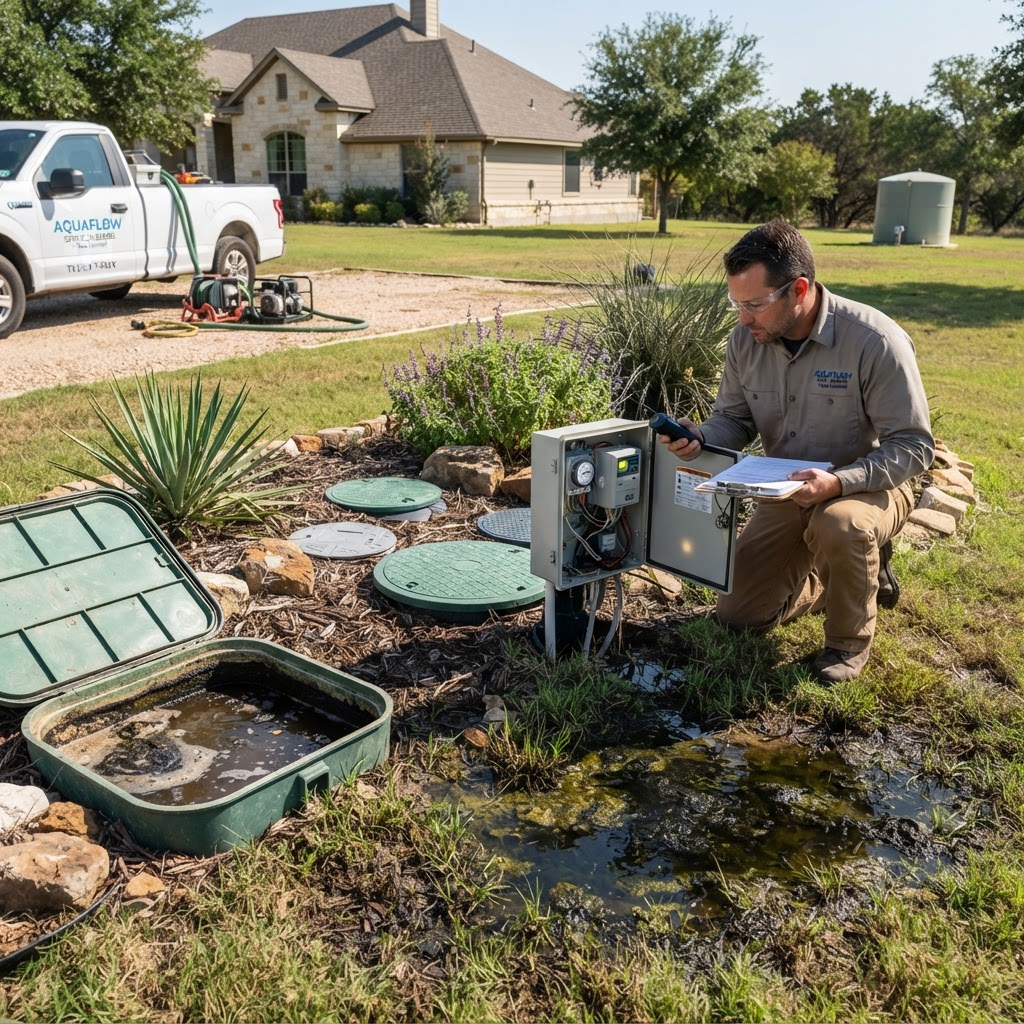
These conditions are not the same on every lot. A property in Waller County may have different site constraints from one in Harris County, and nearby homes can have different soil, elevation, or drainage. Keep vehicles and heavy equipment off septic areas, avoid directing roof or yard drainage toward the system, and do not build over the tank or drain field. If flooding, ponding, odors, or sewage backups occur, limit contact with wastewater and seek professional guidance.
A practical path to approval
To keep a project moving, identify the local permitting authority first, describe the work clearly, and request its current requirements. Keep copies of applications, approved plans, permits, inspection records, and service documents with the property records. Use qualified, licensed professionals where required, and make sure any necessary inspections and approvals are completed before the system is put into service.
Practical takeaway: Verify the rules for your exact address before installing, replacing, or substantially changing a septic system. For help with an inspection or septic service in the greater Houston area, contact Aqua Star Well and Septic, LLC at 936-931-2443.
Need Well or Septic Service?
Our licensed, insured team has served the greater Houston area since 1976. We're available seven days a week.
Call (936) 931-2443