Residential vs Commercial Septic Systems: What Texas Property Owners Should Know
Septic systems for homes and businesses operate on the same basic principles but differ in scale, design, permitting, and maintenance needs. Texas property owners—especially in greater Houston and surrounding communities—should understand those differences to protect their investment and comply with local rules.
Aqua Star Team
Aqua Star Well and Septic, LLC
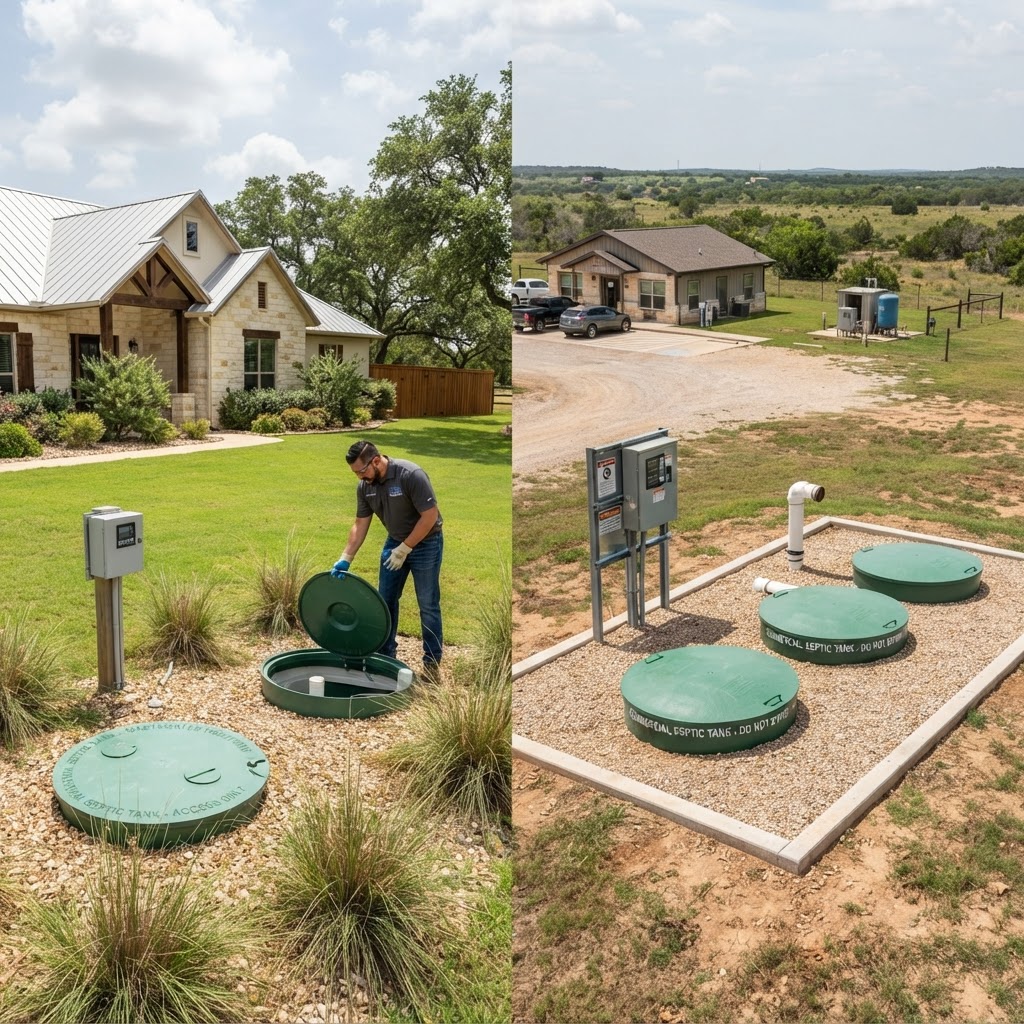
Living in southeast Texas means dealing with heat, heavy clay soils, and a hurricane season that affects drainage and groundwater. Whether you own a single-family home in Hockley or a commercial property in Cypress or Tomball, knowing how residential and commercial septic systems differ can help you avoid failures, fines, and costly repairs.
Key differences: scale, complexity, and use
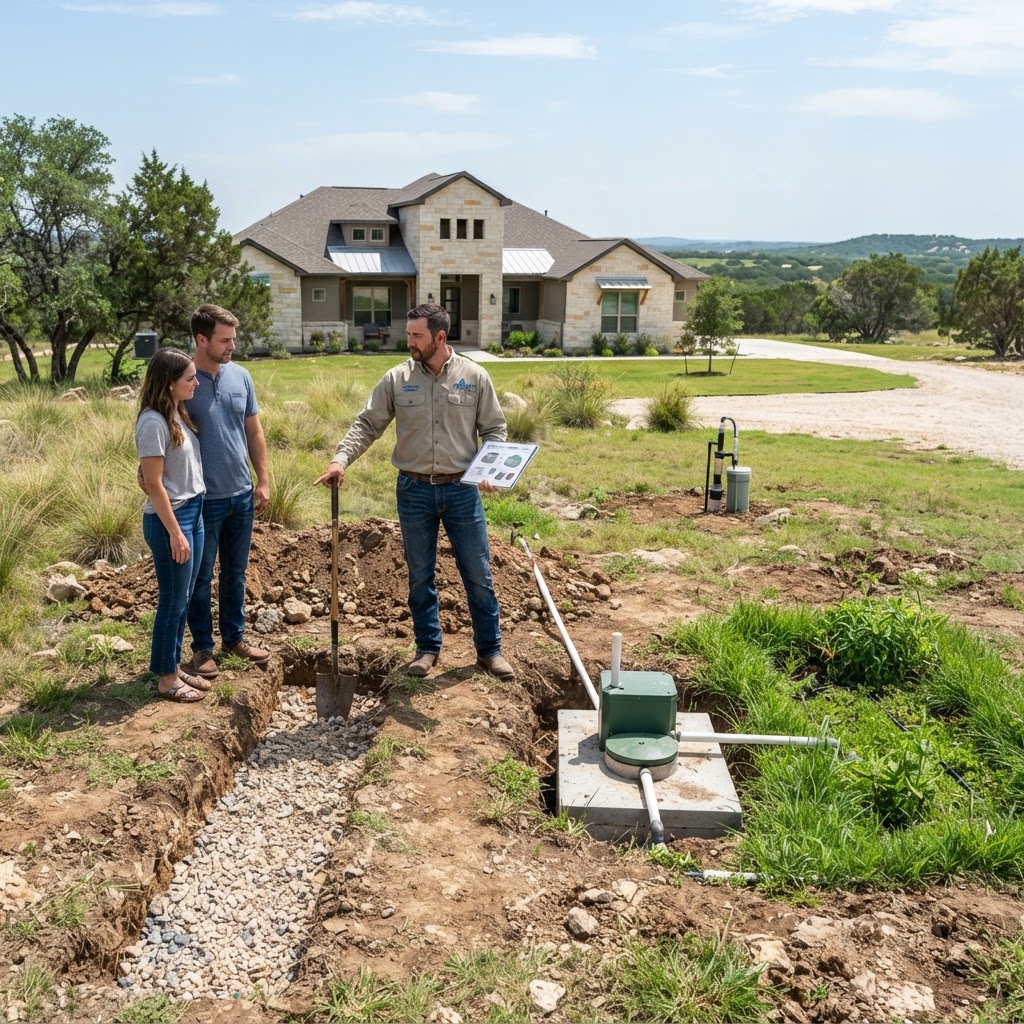
- Residential systems are designed for predictable household flows from a single family or small multi-family dwelling. They tend to be simpler (gravity-fed tanks and drainfields, or small aerobic systems) and easier to maintain.
- Commercial systems must handle larger and more variable wastewater volumes and different waste types (restaurants, laundromats, office buildings). That often requires pretreatment (grease traps, oil/water separators), larger tanks, pumps or lift stations, alarms, and sometimes engineered treatment plants.
- Commercial systems typically require more documentation, operator training, and regular monitoring compared with a residential system.
Design, permitting, and local regulations in Texas
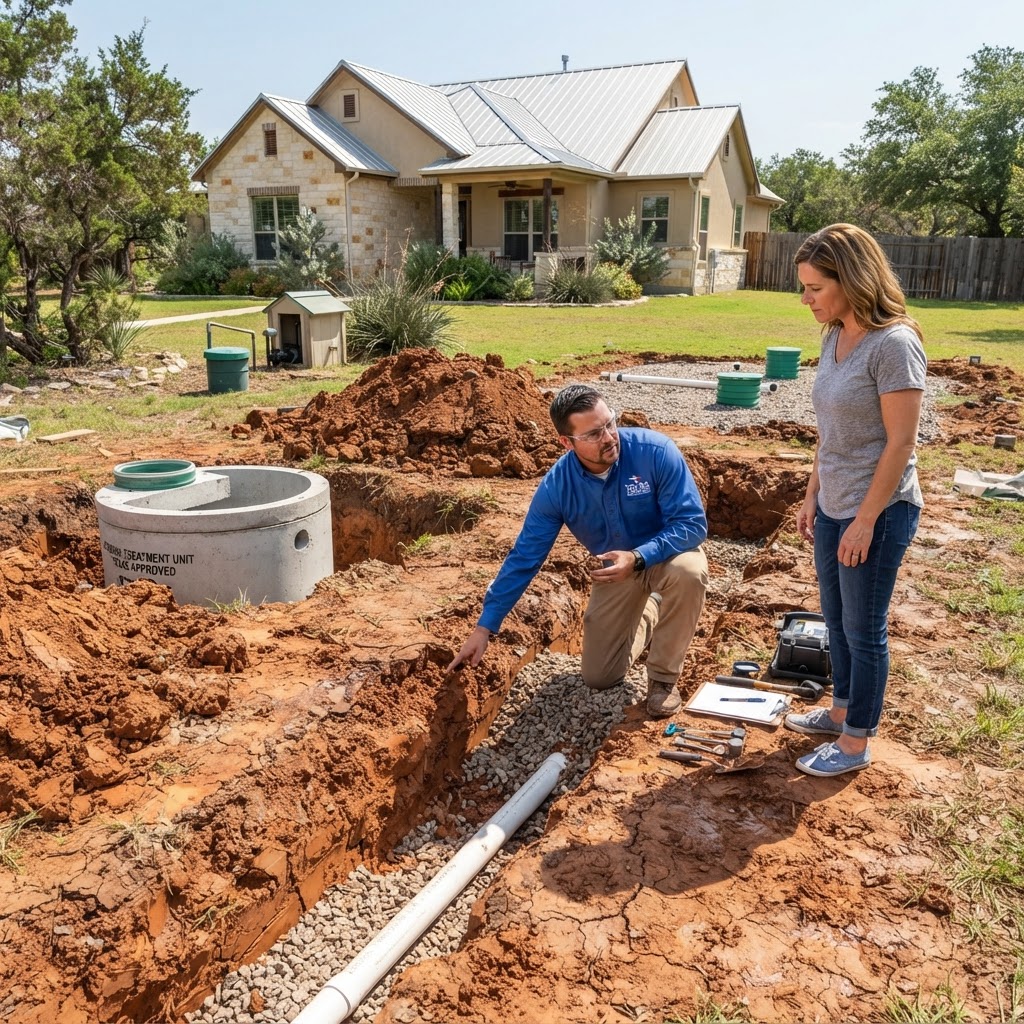
- The Texas Commission on Environmental Quality (TCEQ) and local health departments regulate on-site sewage facilities. Both residential and commercial systems need proper permits and approved designs before installation.
- Permitting for commercial systems usually involves a site-specific engineered plan, flow calculations, and ongoing compliance requirements. Residential systems often follow standard designs when lot size and soil conditions are suitable.
- Local counties around Houston (Harris County, Waller County) and cities may have additional permitting steps or inspection routines—check with your county or city public health or environmental department early in the planning process.
Operation and maintenance: how responsibilities differ
- Residential owners should schedule regular inspections and pump-outs based on household size and system use, watch what goes down drains, and protect the drainfield from heavy vehicles or compaction.
- Commercial systems require a written operation and maintenance plan, frequent inspections, and sometimes certified operators. Businesses that produce grease, food solids, or industrial wastes must install pretreatment and keep cleaning/maintenance logs.
- Common maintenance best practices for any owner:
- Keep a service record and copies of permits/inspection reports.
- Avoid flushing chemicals, grease, or non-biodegradable items.
- Maintain good landscaping practices—don’t plant deep-rooted trees over drainfields and avoid vehicle traffic on the area.
- Ensure alarms, pumps, and electrical components are tested regularly (commercial systems are more likely to have these features).
Southeast Texas site risks: soils, storms, and water table
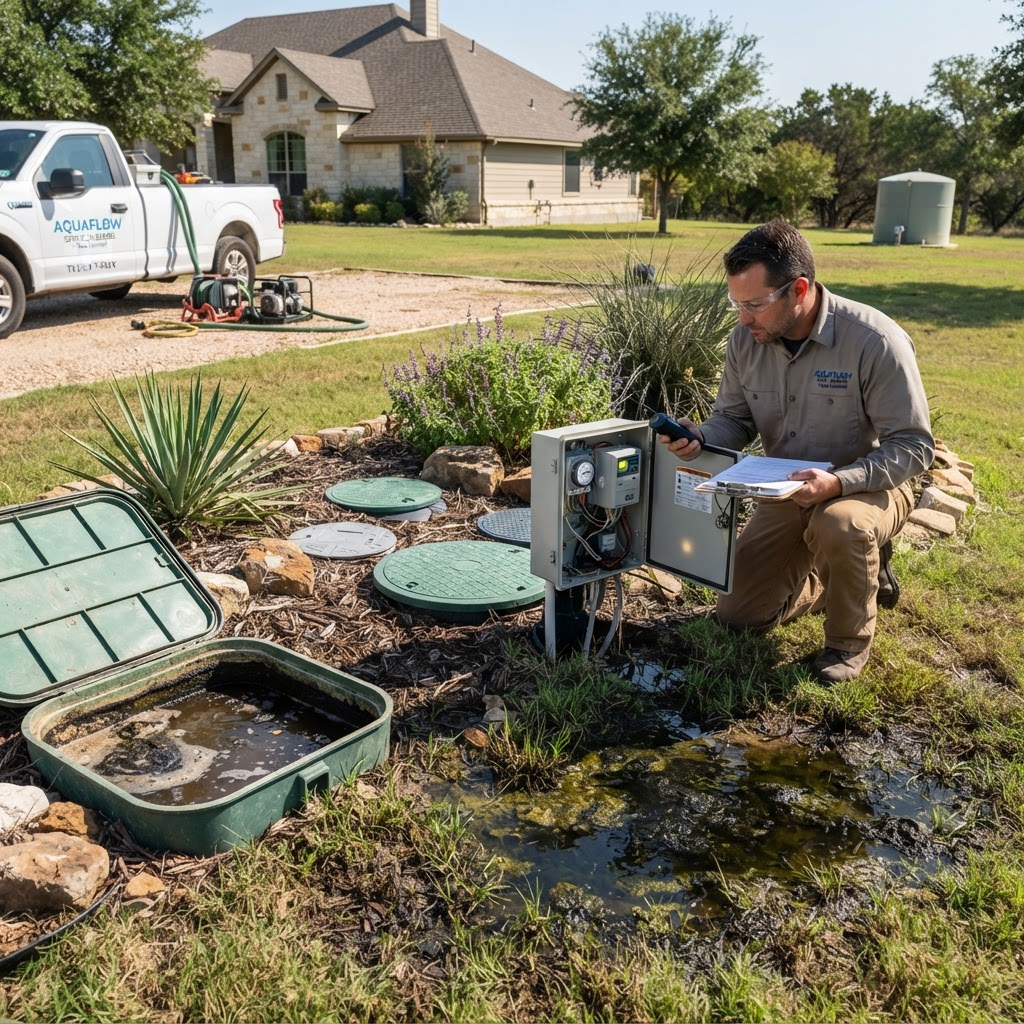
- Many parts of the greater Houston area have heavy, clay-rich soils that drain slowly. Clay can limit effective absorption and may require alternative system designs or expanded drainfield areas.
- Hurricane season and heavy rainfall can raise the groundwater table and saturate drainfields, temporarily reducing treatment capacity or causing backups. Flooding can also spread contaminants if systems are submerged.
- Periods of drought can cause ground movement or lead to tree roots seeking moisture near drainage fields, potentially damaging pipes.
- Mitigation measures include choosing the right system for the site, elevating components or using watertight tanks in flood-prone areas, and prompt service after major flooding events.
Practical steps for property owners
- Start with a site evaluation by a licensed professional before buying property, building, or replacing a system.
- For commercial properties, confirm permit status, required pretreatment, and operator qualifications before opening or transferring ownership.
- Keep routine service contracts and inspection records—these help with compliance and early detection of problems.
- After storms, have the system inspected if you suspect flooding or if you experience slow drains, odors, or alarms.
Conclusion
Residential and commercial septic systems share the same basic goal—safely treating wastewater on-site—but differ substantially in scale, permitting, operation, and risk exposure. In southeast Texas, clay soils, a high water table during storms, and seasonal weather extremes make proper design and regular maintenance especially important.
Practical takeaway: know what type of system you have or need, keep permits and service records current, and schedule regular inspections—especially after heavy storms. For a site evaluation, inspection, or service from a TCEQ-licensed and insured team familiar with Harris County, Waller County, and nearby communities, contact Aqua Star Well and Septic, LLC at 936-931-2443.
Need Well or Septic Service?
Our licensed, insured team has served the greater Houston area since 1976. We're available seven days a week.
Call (936) 931-2443